
July 11th, 2023
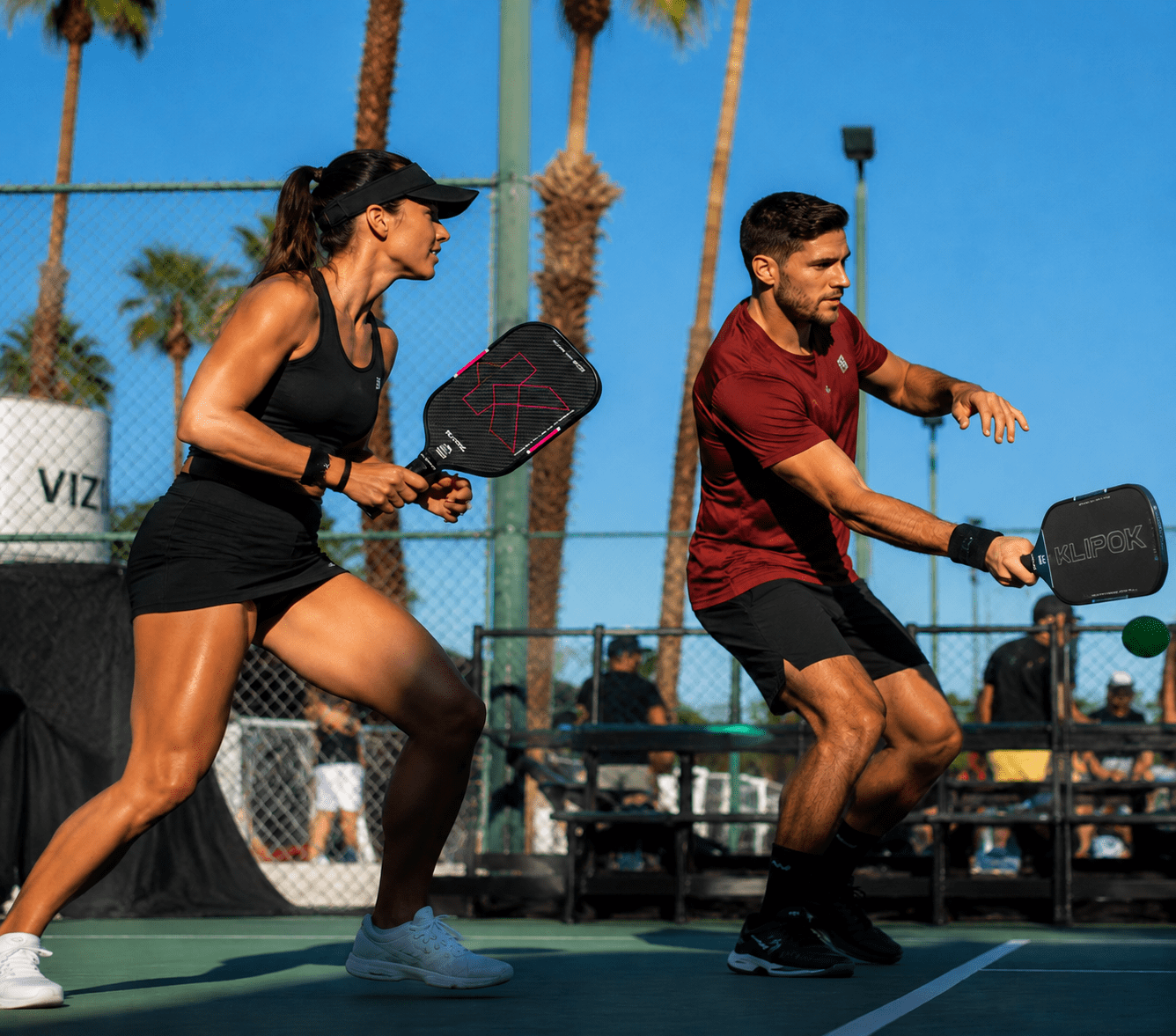
Pickleball doesn’t always happen in tournaments. Most of the sport’s real growth comes from everyday court sessions—where players repeat thousands of shots, adjust positioning instinctively, and slowly build chemistry through experience.
This session reflects that kind of environment in Southern California, where competitive and recreational players regularly meet to train, compete, and push each other forward.
The pace is sharp. The exchanges are short, explosive, and demand constant adjustment at the net.
One player is actively stepping into attack position, taking initiative to compress space. The partner stays balanced and ready, covering transitions and preparing for the next ball.
This kind of coordination doesn’t come from talking—it comes from repetition.
KLIPOK on Court: Built for Competitive Rhythm
n fast doubles play, players rely on equipment that responds consistently under pressure.
KLIPOK paddles are designed around this demand—helping players maintain control during fast exchanges while still allowing aggressive shot-making when opportunities appear.
It’s less about changing how the game looks, and more about keeping performance stable when the pace increases.
Doubles Dynamics in Modern Pickleball
Doubles play at this level is built around constant movement adjustments.
Players rotate responsibility naturally—one presses forward while the other manages depth and recovery space.
Over time, this creates a rhythm where decisions happen almost instantly.
Why This Level Matters
Most competitive players are not defined by tournaments, but by how they train between them.
These repeated sessions are where consistency is built, weaknesses are exposed, and real improvement happens.
For KLIPOK, supporting this level of play means supporting the foundation of the sport itself.